Satellite AI Detects Fires Before 911 Calls, PFAS-Free Gear Goes City-Wide, Electric Aerials Break Weight Barrier
Issue 015 - June 10, 2026
Read time: 7 minutes
This week: NOAA's AI satellite system that spots fires before 911 calls, San Francisco becoming the largest US city to go PFAS-free on turnout gear, and electric aerials breaking the 16-tonne barrier. Plus wearables streaming firefighter vitals to command, smoldering-phase sensors catching fires before they spread, and New York's 14-point plan to stop the volunteer hemorrhage.
WILDFIRE DETECTION
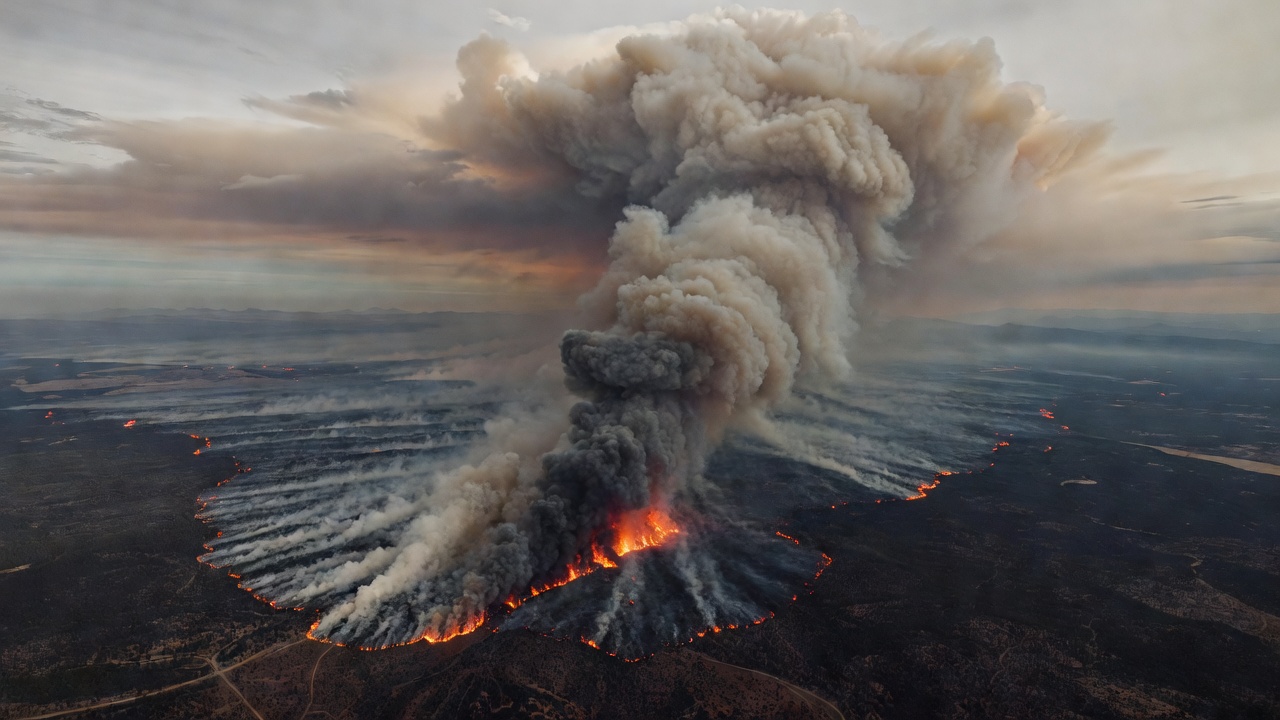
NOAA's AI Fire System Tracks Every Wildfire in Real Time
Less than a year after testing, NOAA's Next Generation Fire System has been adopted by 90% of National Weather Service forecast offices nationwide. The automated satellite system uses AI algorithms to scan imagery every minute, detecting fires as small as a quarter acre through clouds and smoke. During Oklahoma's spring wildfire outbreak, the system provided initial detection on 19 separate fires, with modeling showing firefighter response likely saved more than $850 million in structures and property. California Office of Emergency Services now displays NGFS detections on its statewide initial attack viewer. The system cost under $3 million to develop - 250 times less than the damage it helped prevent in a single outbreak.
The take: Satellite AI just became the cheapest insurance policy in the fire service. When a system that costs $3M to build saves $850M in one outbreak, ROI isn't a question - it's a mandate. The one-minute scan cycle means fires get spotted before most 911 calls.
FIREFIGHTER PPE
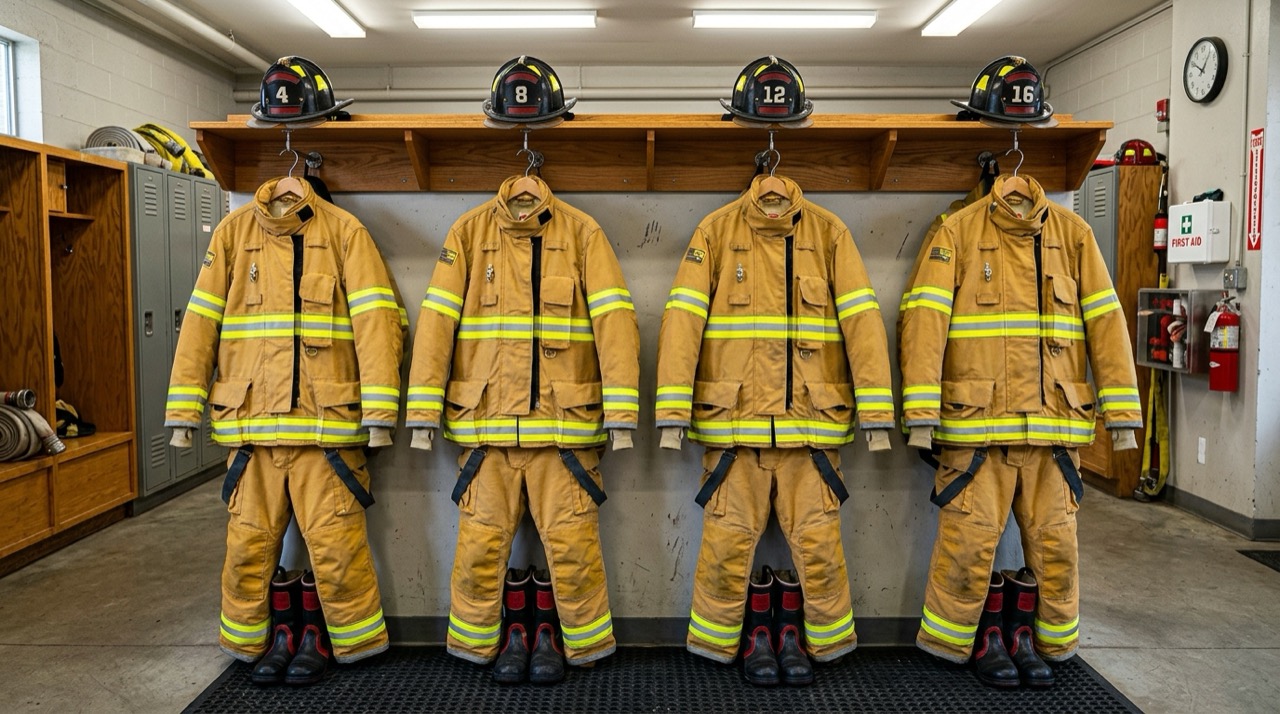
San Francisco Becomes Largest US City to Adopt PFAS-Free Turnout Gear
The San Francisco Fire Department has completed delivery of 1,100 sets of PFAS-free turnout gear, one for every frontline suppression member, making it the largest department in the country to fully transition away from forever chemicals in protective clothing. The $3 million procurement, funded partly through a $2.35 million FEMA AFG grant, used Milliken's Assure moisture barrier - North America's first non-PFAS, non-halogenated flame-resistant barrier - paired with Fire-Dex manufacturing. The gear passed a 90-day wear trial with 50 firefighters in live fire training and meets both NFPA 1971-2018 and 1971-2025 standards. San Francisco's 2024 city ordinance set a June 30, 2026 deadline, making the department one of the first to comply with the growing wave of state PFAS bans from Illinois, Connecticut, and Rhode Island.
The take: The moisture barrier was the last technical barrier to PFAS-free gear. Milliken solved it. Now San Francisco has proven it works at scale in live fire conditions. The question for every other department isn't whether PFAS-free gear exists - it's when your state forces the switch.
WEARABLE TECHNOLOGY
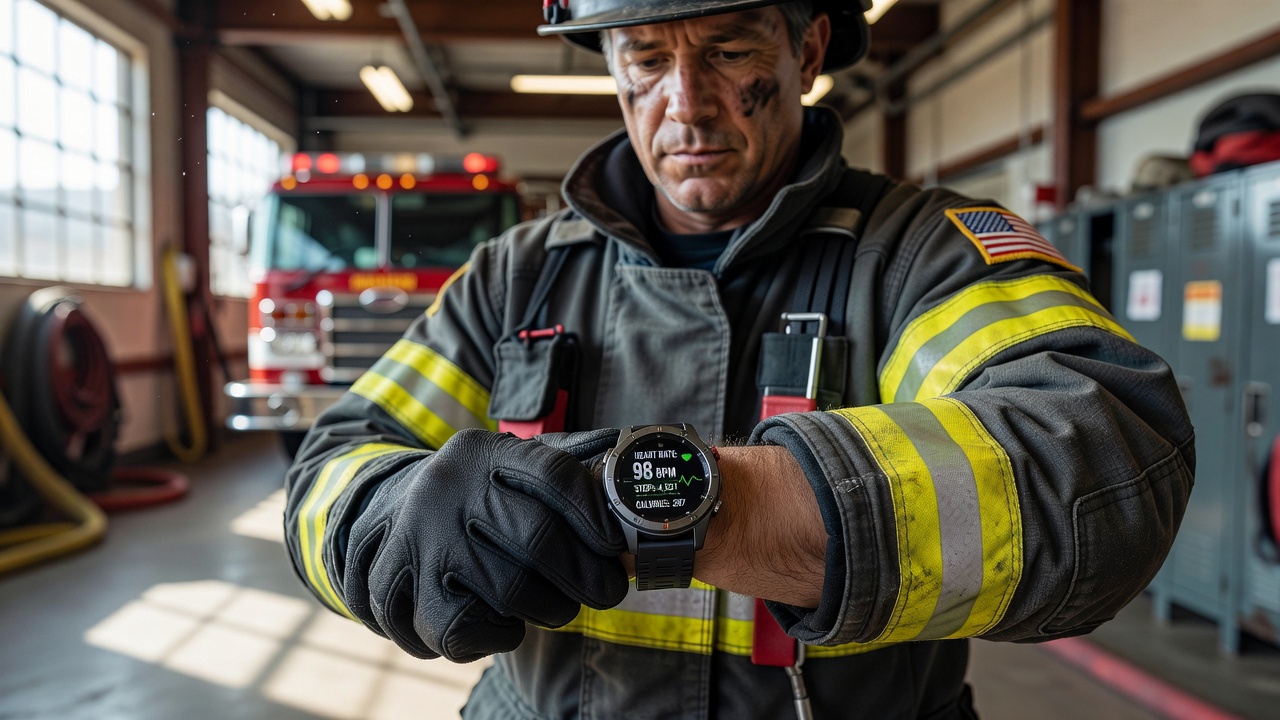
Wearable Tech Streams Firefighter Biometrics to Command
Fire departments are deploying smartwatch-based wearables that track heart rate, body temperature, oxygen saturation, exertion levels, and real-time location data along X, Y, and Z axes. Ascent Integrated Tech's Shield platform uses Samsung watches transmitting to Team Awareness Kit networks, while Red Line Safety's MINI unit tracks air pressure, VOCs, carbon monoxide, and GPS. Indianapolis Fire tested the tech for two years and is outfitting recruit classes to establish biometric baselines. West Metro Fire Rescue enrolled 197 personnel streaming WHOOP wristband data through an IRB-approved privacy firewall. The devices alert incident commanders to abnormal heart rates or Mayday situations.
The take: If your department still tracks firefighters by last-seen-walking-into-a-building, you're two generations behind. Real-time biometrics turn gut-check accountability into data-driven intervention before a firefighter collapses.
ELECTRIC APPARATUS
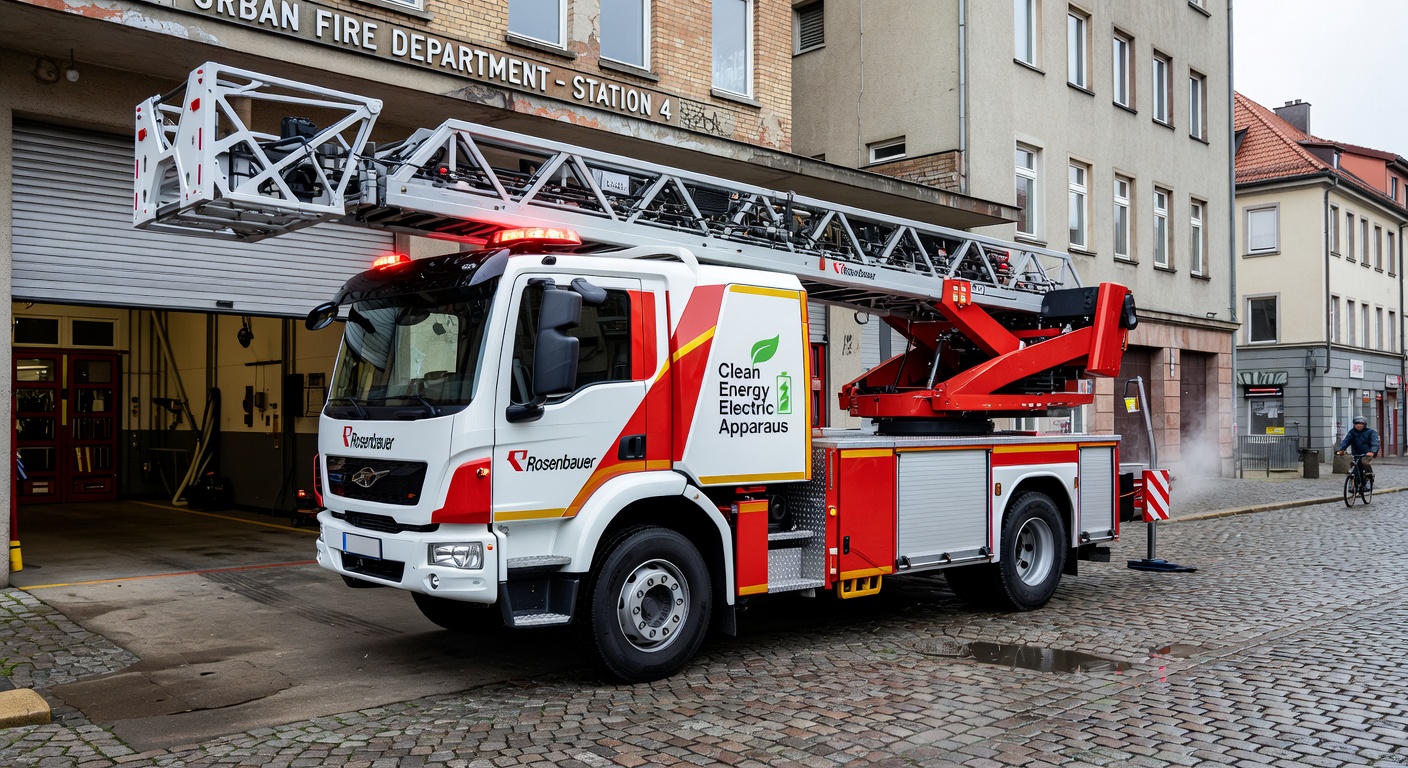
Rosenbauer Unveils First All-Electric Aerial Ladder Under 16 Tonnes
At INTERSCHUTZ 2026, Rosenbauer debuted the L32A-XS electric aerial ladder on MAN's new eTGM chassis - the first fully electric aerial ladder weighing under 16 tonnes with rear axle load under 10 tonnes. The vehicle meets DIN EN 14043 and E DIN 14701-2 standards for class 23/12 ladders while offering emission-free, quiet operation suited to urban access restrictions. Developed through collaboration with the North Rhine-Westphalia Fire Department Institute and chassis makers, keys were handed over at the show on June 1. Rosenbauer's RT electric firefighting vehicles are now in use in 14 countries across five continents.
The take: Weight restrictions kept electric aerials out of tight European city centers - until now. Emission-free means firefighters can stage indoors without filling parking garages with diesel exhaust. The 16-tonne barrier was the last excuse against electrification.
WILDFIRE TECHNOLOGY
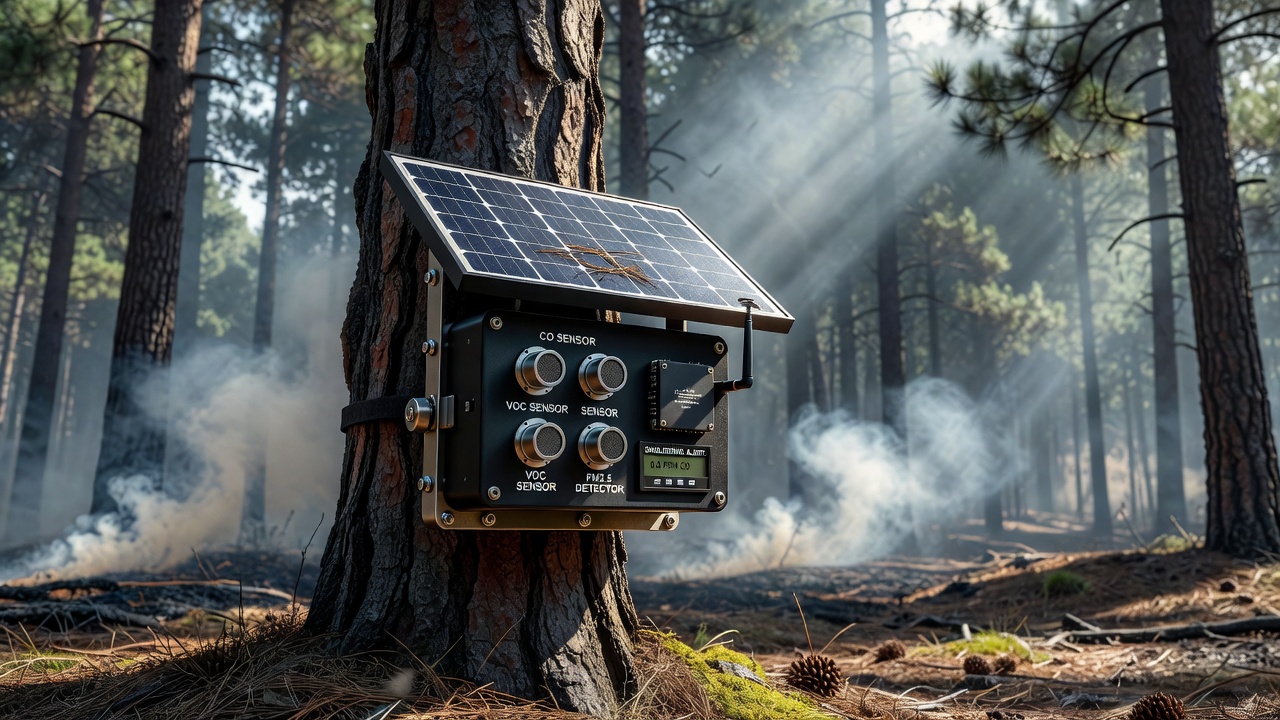
Dryad's Smoldering-Phase Sensor Drones Reach XPRIZE Finals
Dryad Networks was named an XPRIZE Wildfire finalist for its integrated Silvanet sensor network and Silvaguard autonomous drone system. Solar-powered AI gas sensors detect trace wildfire gases and micro-climate shifts during the smoldering stage within minutes of ignition. Alerts trigger observation drones for visual confirmation, then water-equipped suppression drones execute targeted drops at the exact ignition point. Field demonstrations completed the full cycle from detection through containment in under 12 minutes. Dryad has deployed over 30,000 sensors across 50+ sites worldwide. Five finalist teams will compete in summer 2026 in Alaska to autonomously detect and suppress a high-risk fire across 1,000 km² within 10 minutes.
The take: Traditional detection waits for visible flames - by then the fire has a head start. Smoldering-phase sensors catch fires before they spread, turning suppression from a reactive race into a preventable event. Twelve minutes from sensor alert to water drop is the new benchmark.
VOLUNTEER RECRUITMENT
New York Volunteer Ranks Drop 33%, FASNY Rolls Out 14-Point Plan
New York has lost a third of its volunteer firefighters over the past 20 years, prompting the Firefighters Association of the State of New York to unveil a volunteer optimization legislative initiative. The 14-point proposal includes increasing the base tax credit to $800 with graduated credits up to $7,500 annually for certified duty-crew shifts, eliminating the either/or limitation between property tax exemption and income tax credit, adding a $5,000 childcare/daycare tax credit, and creating employer tax incentives for businesses that allow responses during work hours. Broome County alone dropped from 2,000 volunteers 25 years ago to roughly 900 today. FASNY says rising call volumes combined with shrinking rosters accelerate burnout and drive further departures.
The take: Volunteering used to be about service. Now it's about whether you can afford to serve. Tax credits and childcare reimbursements aren't perks - they're the price of keeping stations open in communities that can't fund career departments.
What We're Watching
Thermal drone payloads for size-up - DJI's Matrice 30T and FLIR's Black Hornet 3 are being trialed by urban departments for immediate thermal reconnaissance on arrival, cutting size-up time from minutes to seconds.
Turnout gear decon validation tech - Extractors with built-in contamination sensors are hitting the market, giving departments objective proof that gear is actually clean after washing cycles.
NFPA 800 lithium-ion battery fire standard - The first comprehensive standard for lithium-ion battery hazards across their full lifecycle is heading toward adoption, covering everything from EV fires in parking garages to battery energy storage systems in commercial buildings. Departments that haven't trained on thermal runaway suppression are about to get a mandate.