Issue 025: Ransomware at the Dispatch Center, AI in the Insurance Algorithm
This week inside the Brief:
- ■ Ransomware killed a city's entire 911 dispatch at 5:45 AM
- ■ Hard numbers on fire overtime spiraling while staffing stays flat
- ■ AI that scores every roof's wildfire risk and decides who loses coverage
- ■ Fire agency deploys trailer-based motion simulators for driver training
- ■ Drone AI that sees fire hotspots hidden under forest canopy
- ■ Two PFAS compounds found in firefighters that nobody is testing for
- ■ A PFAS-free hood that blocks 99% of contaminants you can buy today
Read time: 9 minutes

CYBERSECURITY · 911 DISPATCH · CITY INFRASTRUCTURE
Ransomware Knocks Out 911 Fire Dispatch in a Northern California City
Suisun City, California declared a state of emergency after a malware attack disrupted 911 routing, police and fire dispatch, and other core city systems at 5:45 a.m. on August 7. The city shut down its entire IT network to contain the threat and preserve evidence. Firefighters kept responding to emergencies throughout the outage by routing calls through the Solano County dispatch center, but the incident is a real-world stress test of what happens when a mid-sized city's dispatch infrastructure gets forced offline mid-shift with less than a day's notice.
The take: Every chief running CAD or MDT systems tied to a city network should treat this as a live case study and pressure-test their own dispatch failover plan this month. If you don't know what your backup looks like, now is the time to find out.
Read the full story at KION →
BUDGET · STAFFING · CITY AUDIT
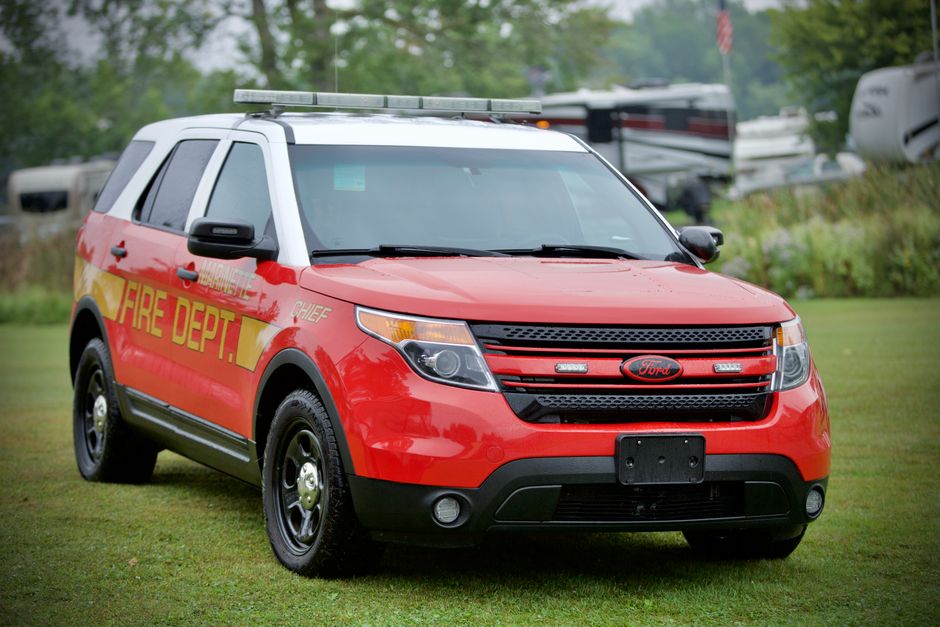
DC Auditor Finds Fire Overtime Spiraling While Staffing Stays Flat
The District of Columbia Auditor released a report examining whether the city's public safety agencies including DC Fire and EMS are spending unsustainably on overtime instead of fixing underlying staffing gaps. The report lands alongside similar findings in Duluth, Minnesota, where the fire department blew past its 2025 overtime budget by 1.3 million dollars and the city is now reviewing dispatch protocols and apparatus utilization. These audits matter because overtime-driven staffing is functionally invisible to the public until a shift goes uncovered, and a chief without clean per-station overtime data walks into budget season with no defense against a council that wants to cut instead of hire.
The take: Overtime audits are becoming the preferred political tool for challenging fire budgets, and departments without clean per-station overtime data will lose that argument by default.
Read the full story at DC Auditor →
DEEP DIG · AI · INSURANCE · WILDFIRE RISK
Insurers Are Quietly Building AI Models That Score Every Roof
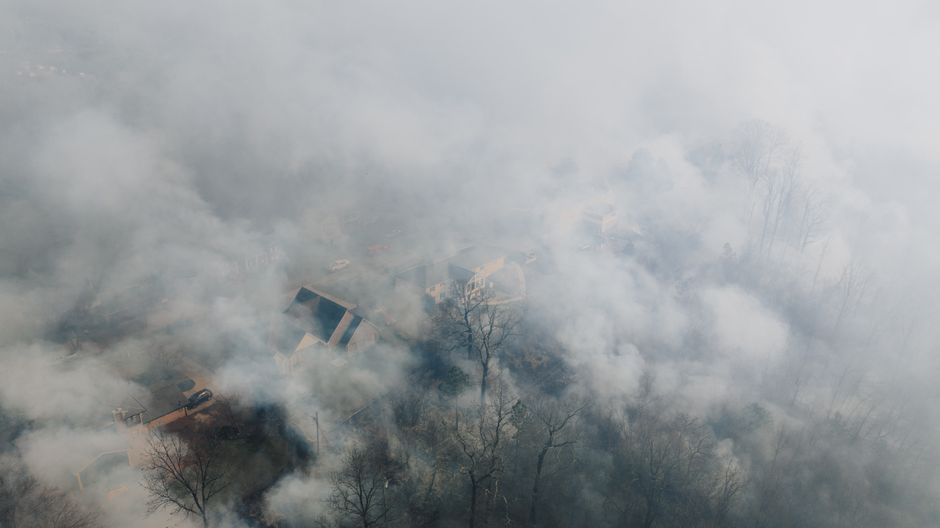
Lloyd's of London and catastrophe modeler KatRisk are deploying parcel-level AI wildfire risk models that use computer vision on aerial imagery to evaluate defensible space, vegetation density, building materials, and topography instead of relying on zip-code averages. These AI systems are now mandatory rather than optional for insurers as regulators in California and Colorado require property-specific mitigation factoring and appeal-ready audit trails for risk scores. For fire departments and chiefs, this shift matters because these same AI models increasingly determine which neighborhoods lose insurance coverage entirely, which in turn shapes evacuation planning, mitigation grant priorities, and political pressure on wildland-urban interface fire policy.
The take: AI wildfire scoring is moving from an insurance back-office tool to a de facto zoning and mitigation-funding signal that fire departments will need a seat at the table to influence.
Read the full story at KatRisk →

DEEP DIG · TRAINING · APPARATUS SAFETY
Australian Fire Agency Rolls Out Motion Simulators for Driver Training
The Country Fire Authority in Victoria, Australia is deploying five trailer-based mobile simulators built by MOTUM Simulation to overhaul driver training for its volunteer firefighters, with the first two units arriving in August 2026 and the remaining three operational by December. The simulators combine virtual reality headsets, eye-tracking technology, six-degree-of-freedom motion platforms, and real-time performance analytics to safely replicate high-risk driving conditions including emergency response codes, smoke-covered roads, and rough off-road terrain. This is one of the largest dedicated emergency services driving simulation fleets built for a fire agency to date, and it targets a specific, underexamined risk category: apparatus collisions during emergency response, which remain a leading cause of firefighter line-of-duty deaths and injuries.
The take: A trailer-based motion simulator fleet solves the two biggest US objections to driver simulation: cost and a fixed facility. This is worth watching as a budget model for volunteer and combination departments.
Read the full story at Mirage News →
DEEP DIG · AI · WILDFIRE DETECTION
Drone AI Learns to See Fire Hotspots Hidden Under Forest Canopy
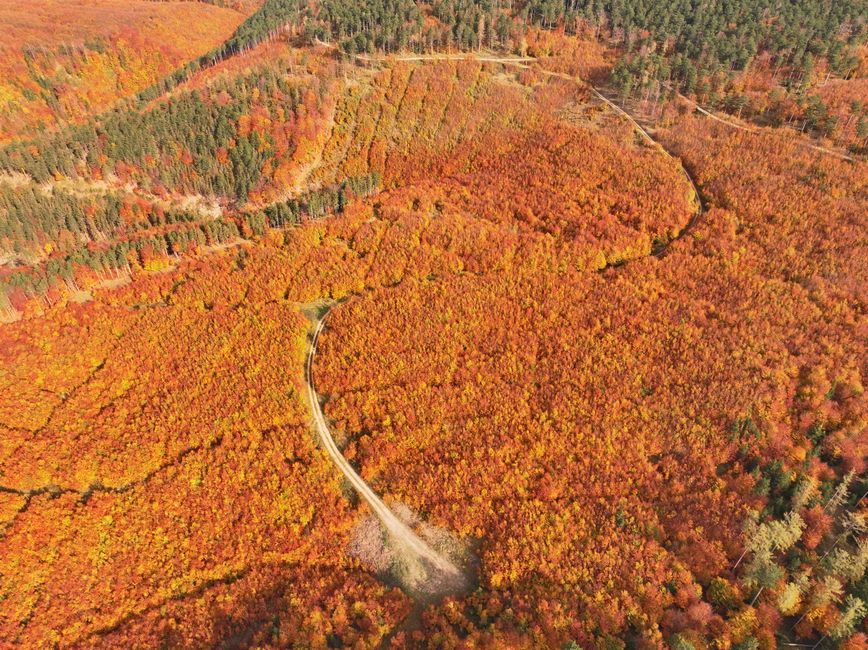
Researchers from Johannes Kepler University Linz published a method that reconstructs ground surface temperatures through occluding forest canopy, aiming to let autonomous drones spot ground fires before smoke or flame is visible from above. The system combines synthetic aperture thermal sensing with a trained visual state space model that recovers the true temperature of partially hidden soil and fire hotspots. To get around a shortage of real wildfire training data, the team built a pipeline using latent diffusion models plus procedural forest simulation to manufacture realistic synthetic thermal scenes. In field tests on real hotspots, the corrected imagery cut error by 12.8 times over conventional thermal cameras and 2.6 times over uncorrected synthetic aperture imaging.
The take: If this canopy-penetrating thermal approach scales past the lab, it solves the exact wind-dependency flaw that sank the last generation of federally funded wildfire sensors.
Read the full story on arXiv →
FIREFIGHTER HEALTH · PFAS · RESEARCH
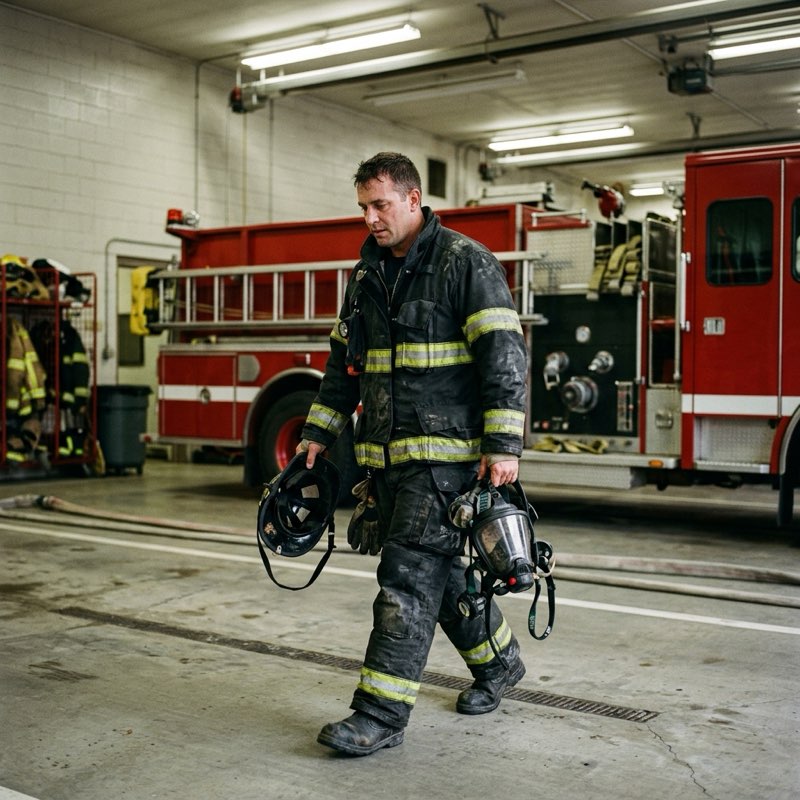
CMU Finds Two Unstudied Forever Chemicals Spike After Firefighting
Carnegie Mellon University researchers drew blood from 33 firefighters in Tucson, Arizona within two days of a fire response and found significantly elevated levels of two novel PFAS compounds that are not part of standard testing panels and have never been studied before. Lead researcher Carla McDonough's lab found that while previously known targeted PFAS chemicals were not elevated immediately after a fire, these two unstudied compounds spiked well above general population baselines. Because the chemicals are new to the research literature, there is no existing data on their sources of exposure or potential health effects, meaning current PFAS blood panels used by fire departments and occupational health programs are likely missing a real exposure signal entirely.
The take: Every fire department PFAS biomonitoring program built around legacy compound lists needs to account for the fact that researchers are still discovering new PFAS exposures specific to fireground response.
Read the full story at CMU News →
GEAR · CANCER PREVENTION · INDIVIDUAL PURCHASE
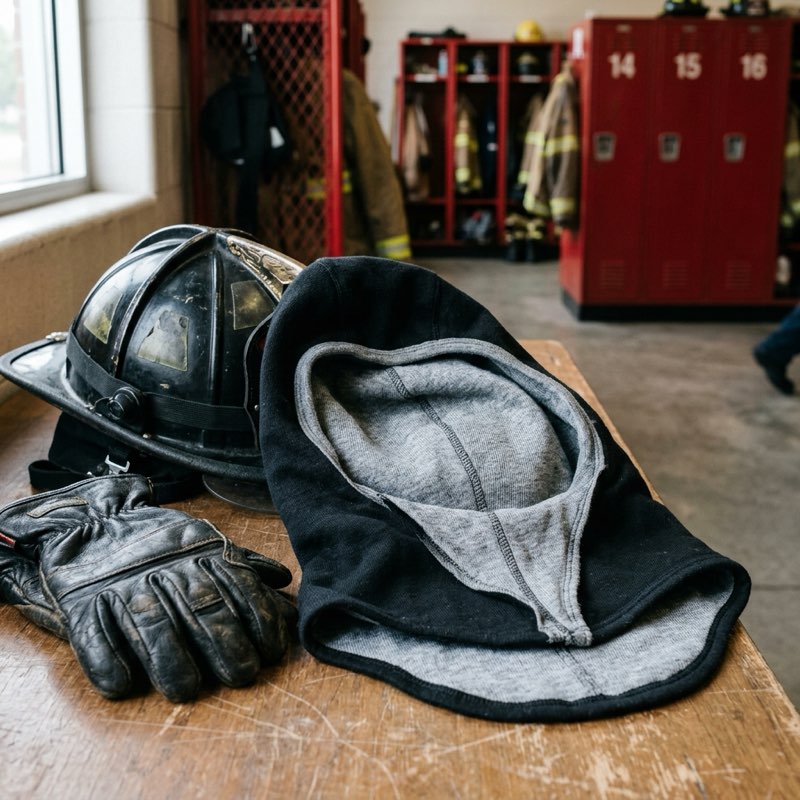
This PFAS-Free Particulate Hood Blocks 99% of Fireground Contaminants
LION's RedZone StedAir Prevent Clear hood is the first particulate-blocking hood on the market built with no intentionally added PFAS in the barrier layer. It uses a two-layer construction with an exclusive StedAir Prevent Clear particulate blocker sandwiched inside a Kermel/Viscose flame-resistant shell that filters over 99% of particles between 0.1 and 1.0 microns. The hood is certified to NFPA 1971 (2018 Edition), carries a Thermal Protective Performance rating of 24, and a Thermal Heat Loss rating of 375, meaning it manages heat stress better than most hoods in its class. It maintains barrier performance through 200 washes, which is ten times the 20-wash minimum NFPA requires. Universal sizing, extended bib for shoulder and neck coverage, and an integrated barcode tag for asset tracking. Available in black or tan.
The take: If you're an individual firefighter reading the CMU PFAS study above and wondering what you can actually do about it today, upgrading your hood is one of the few moves you can make without waiting for your department to act. A PFAS-free particulate-blocking hood that survives 200 washes is a meaningful personal investment in cancer prevention.
Learn more at LION Protects →
WHAT WE'RE WATCHING
Whether Suisun City publishes a post-incident report on how long dispatch failover took and whether crews experienced any response-time slips during the outage.
How many other US state fire training academies pilot a mobile motion-simulator fleet in the next 12 months, and whether injury/near-miss data from CFA's first season moves the needle on adoption.
Whether state regulators require fire department input into AI wildfire risk scoring appeals, particularly under California AB and Colorado HB mitigation disclosure laws.
Subscribe to The Overhaul Brief
Weekly fire service news. Tech, AI, leadership, workforce, and the stories the trade pubs miss. No fluff, no fundraising appeals, no spam.
Subscribe Free